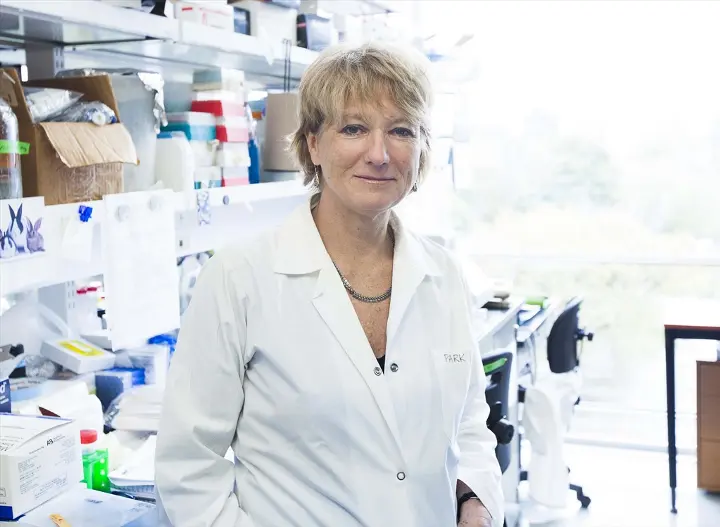
Network names four outstanding early-career clinician-scientists as recipients of its 2026 Clinician-Scientist Awards
New investment of $2.1 million will support innovative research aimed at improving cancer detection, treatment and quality of life for patients across Canada.

Four promising early-career clinician-scientists have been named recipients of the 2026 Clinician-Scientist Awards, funded by the Marathon of Hope Cancer Centres Network (MOHCCN). Each will receive $525,000 ($262,500 from the Network and $262,500 in matching funds) over three years to support innovative research aimed at improving cancer care through precision oncology.
This new investment, totalling $2.1 million, will support research focused on Hodgkin lymphoma, brain tumours, prostate cancer, and head and neck cancers. The projects will explore new ways to detect cancer recurrence earlier, develop more effective treatments, and reduce treatment-related side effects, with the ultimate goal of improving outcomes and quality of life for Canadian cancer patients.
"These awards reflect our commitment to supporting the next generation of clinician-scientists who are working to bring the benefits of precision oncology to patients across Canada," says Dr. André Veillette, MOHCCN executive director. "By supporting researchers who work directly with patients, we are helping turn important clinical questions into innovative research projects that have the potential to improve how we detect, monitor, and treat cancer."
The four award recipients and their projects are:
- Dr. Tomohiro Aoki (University Health Network – Princess Margaret Cancer Centre) will develop a highly sensitive blood test to monitor treatment response and detect recurrence in patients with Hodgkin lymphoma. By identifying tiny amounts of cancer DNA circulating in the bloodstream, his research could help doctors determine whether treatment is working, detect relapse earlier and avoid unnecessary treatments and their long-term side effects. Learn more here.
- Dr. Charles Couturier (McGill University) will study how immune cells interact with brain tumours to identify new opportunities for treatment. His team will map the behaviour of immune cells across different types of adult brain tumours and investigate ways to reprogram them to help the immune system fight cancer, laying the groundwork for more effective immunotherapies. Learn more here.
- Dr. Rachel Glicksman (University Health Network – Princess Margaret Cancer Centre) will lead a clinical trial comparing two types of radiation therapy used to treat prostate cancer: a standard radiation therapy and a newer approach that adapts treatment to changes in a patient's anatomy. Her research will determine whether this more personalized approach can reduce side effects and improve quality of life for prostate cancer patients, while helping doctors identify which patients are most likely to benefit. Learn more here.
- Dr. Enrique Sanz Garcia (University Health Network – Princess Margaret Cancer Centre) will investigate whether a new blood test using whole-genome sequencing can detect the recurrence of head and neck cancers months before they become visible on scans. His research could help doctors identify patients who need earlier intervention and develop more personalized approaches to monitoring patients after treatment. Learn more here.
Together, these projects highlight the potential of precision oncology to address important challenges faced by cancer patients, from the uncertainty of whether treatment is working to the long-term side effects that can affect their quality of life.
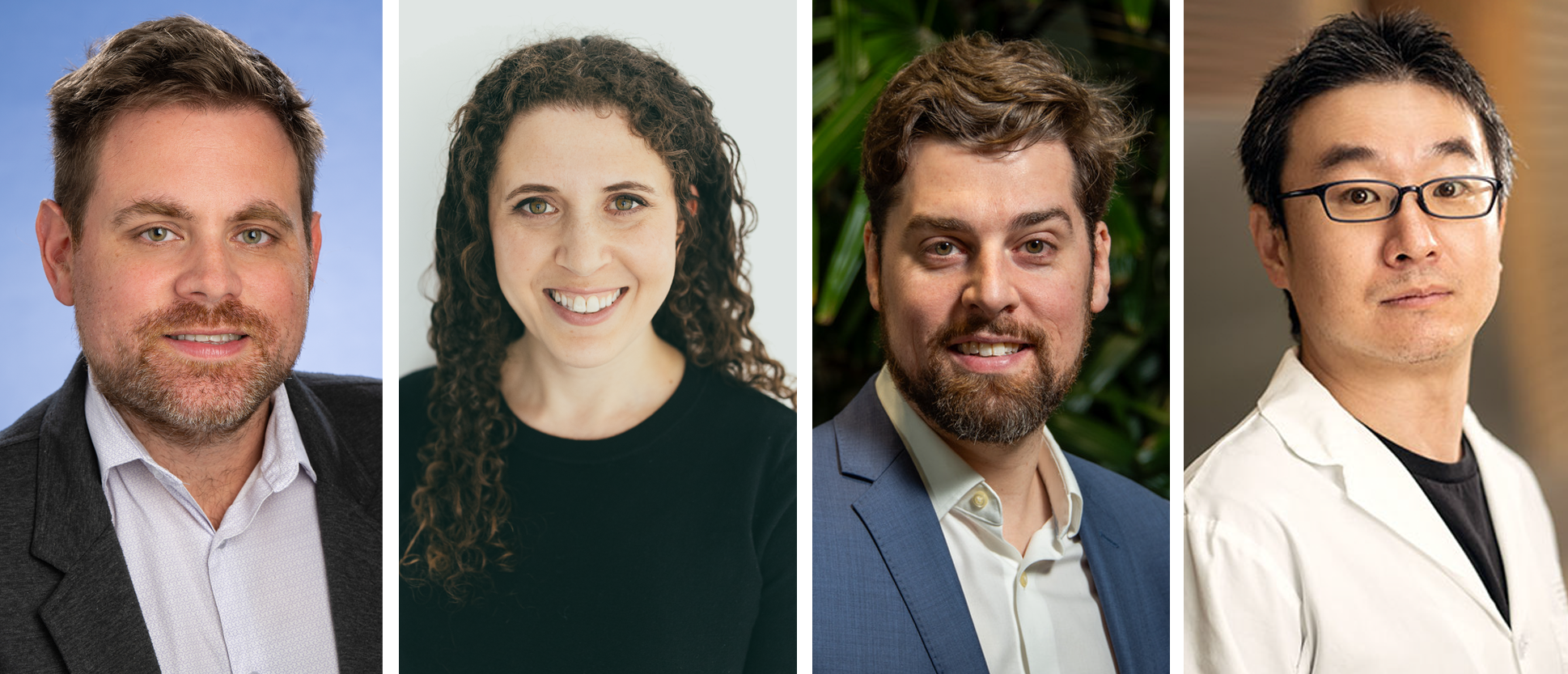
2026 MOHCCN Clinician Scientist Award Winners (from left to right): Drs. Enrique Sanz Garcia, Rachel Glicksman, Charles Couturier, Tomohiro Aoki
About the award
The MOHCCN Clinician-Scientist Award provides outstanding early-career clinician-scientists with funding to support high-quality research in precision oncology. The award is designed to help promising investigators establish independent research careers while working in close collaboration with established MOHCCN-funded teams.
In addition to funding, recipients will benefit from access to the Network's national community of researchers, clinicians and patients, as well as its genomic expertise, data resources and research infrastructure. In turn, their projects will generate new knowledge and tools that can help advance the Network's mission of accelerating the implementation of precision medicine and bringing its benefits to more Canadians with cancer.
Projects


-
Regional Consortia
Marathon of Hope - Québec
The Marathon of Hope – Québec (MOH-Q) brings together leading scientists and clinicians from hospitals and research centres including the Research Institute of the McGill University Health Centre (RI-...Read more
-
-
Regional Consortia
Ontario Cancer Consortium
The Ontario Cancer Consortium coalesces the expertise and efforts of clinicians, pathologists, software developers and data and translational scientists to help accelerate precision medicine for cance...Read more
-













Related News
-

Government of Canada invests $80 million to expand precision oncology across Canada through the Marathon of Hope Cancer Centres Network
The Terry Fox Research Institute (TFRI) and Terry Fox Foundation (TFF) welcome a new $80-million investment from the Government of Canada that will help expand access to precision oncology and acceler... -

Terry Fox-funded researchers raise over $182k for cancer research in 2026 Terry Fox Run Challenge
This Sunday, Terry Fox-funded researchers across Canada came together once again for this year's Terry Fox Run Challenge, raising $182K and counting for cancer research! -

Patient Voices in Research initiative recipients share their results with the Network
This spring, research teams funded through MOHCCN’s Patient Voices in Research Initiative presented the results of their projects to the Network in a series of seminars. -
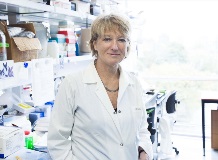
The Terry Fox Research Institute and the Marathon of Hope Cancer Centres Network congratulate Dr. Morag Park on her appointment as President and Scientific Director of the Gairdner Foundation
The Terry Fox Research Institute (TFRI) and the Marathon of Hope Cancer Centres Network (MOHCCN) are proud to congratulate Dr. Morag Park on her appointment as President and Scientific Director of the...