
Defining the role of lung and tumour microbiomes in the development of non-small cell lung cancer
Could measuring bacteria in the lungs help scientists detect cancer earlier?
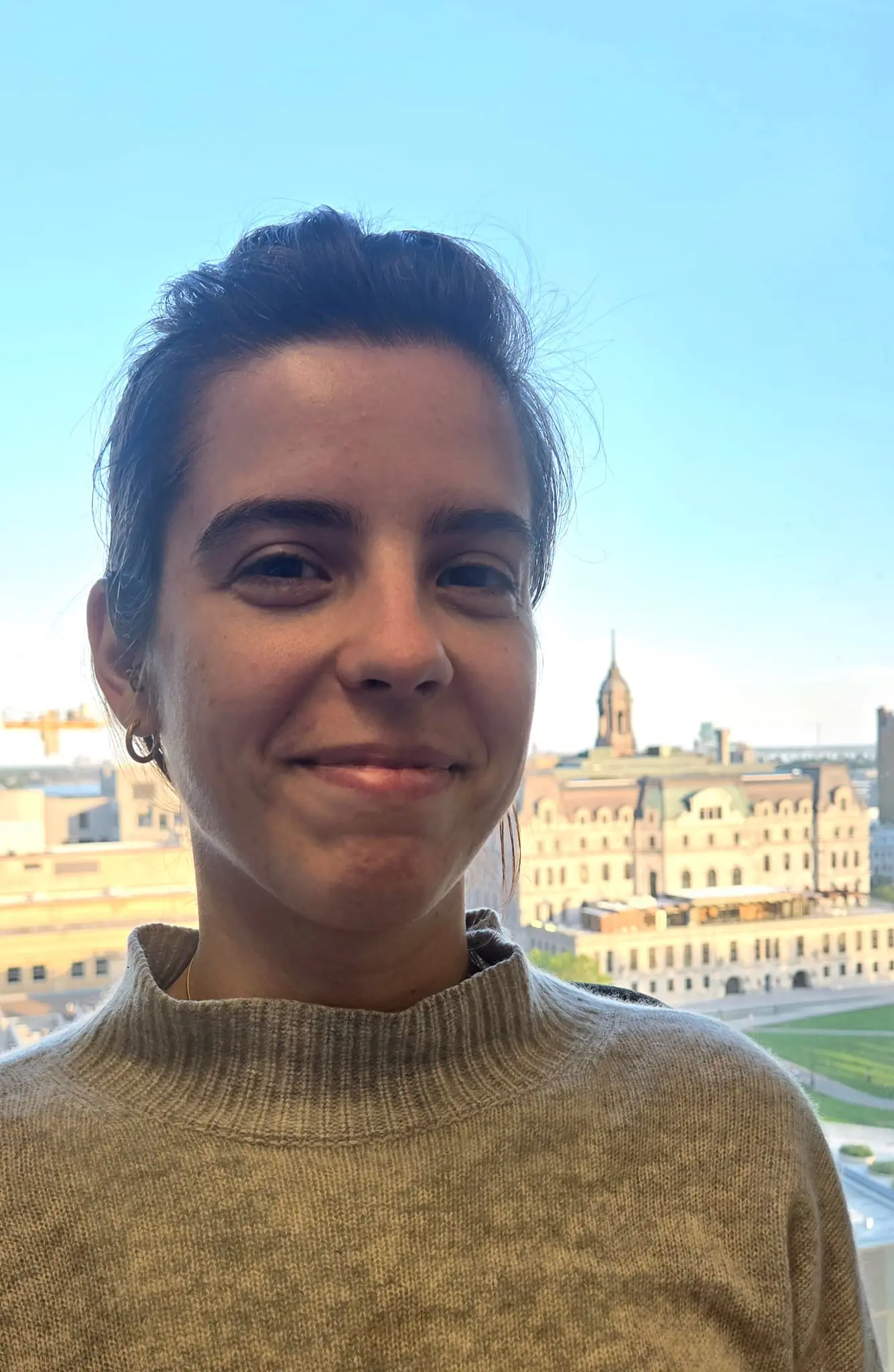
Dr. Mallia Geiger | Centre hospitalier de l'Université de Montréal | Mentor: Dr. Arielle Elkrief
Lung cancer remains the leading cause of cancer-related deaths in Canada, in part because it is often diagnosed at an advanced stage. Finding new ways to detect the disease earlier, when treatments are more effective, could help save lives.
New funding through the Marathon of Hope Cancer Centres Network’s Health Informatics & Data Science Awards will allow Dr. Mallia Geiger, a postdoctoral researcher at the Centre hospitalier de l'Université de Montréal, to explore an unexpected avenue for earlier detection: bacteria living inside our lungs.
Geiger will investigate whether certain bacteria contribute to lung cancer progression. By analyzing samples from patients with and without lung cancer, she will identify which bacteria are present, determine whether they are alive, and explore whether they are found inside tumours.
Her research will also leverage genomic data collected through the Network to uncover patterns that might otherwise remain hidden. Her findings could help researchers develop new tools to detect lung cancer earlier, predict treatment responses, or identify therapies targeting harmful bacteria.
Beyond funding her research, the award will provide Geiger with valuable mentorship opportunities. We spoke to her and her mentor, Dr. Arielle Elkrief, to learn more about the project and the impact this award could have on her career.
MOHCCN: How would you describe your project to a lay audience?
Dr. Geiger: The trillions of microorganisms living in and on the human body, also known as the gut microbiome, have increasingly become implicated in human health and disease. In oncology, groundbreaking work has shown that the gut microbiome plays an important role in cancer development, progression and response to treatment, especially immunotherapy. While most studies have focused on gut microbes, recent discoveries have demonstrated that bacteria are present in the airways and lungs, and that they are linked to lung cancer development as well as its response to immunotherapy. My research will address the question of whether bacteria drive lung cancer progression by analysing bronchoalveolar lavage samples (a lung sample obtained in a routine clinical procedure) from patients with and without lung cancer, to confirm which types of bacteria are present and whether they are alive. I will also analyse patient lung tumour samples to see if bacteria infiltrate tumors, and which types.
MOHCCN: Why is this project important? How does it advance precision medicine for cancer? What potential impact could it have on patients?
Dr. Geiger: Lung cancer is the leading cause of cancer deaths in Canada, and late-stage disease carries poor outcomes. Strategies to detect lung cancer earlier are therefore an urgent need. This work adds a new biological dimension, the tumor microbiome, to how we profile and understand a patient's specific cancer. In parallel to gut microbiome research which is leading to new microbiome-based biomarkers and targeted therapies for several cancer types (e.g. live biotherapeutic products informed by bioinformatic analyses of gut microbiota), my results could inform screening tools to detect lung cancer earlier, as well as potential therapies which could target harmful bacteria and help patients respond to treatment.
MOHCCN: How does your project relate to the Marathon of Hope Cancer Centres Network? Why is it important for the Network to fund this type of work?
Dr. Geiger: This project aligns with the Marathon of Hope Cancer Centres Network’s commitment to advancing data-driven, collaborative cancer research across Canada. The project will leverage the 15000-strong database of MOHCCN tumor samples to generate new microbiome-centred biological insights in lung cancer. Funding this type of work is important because advances in cancer research are increasingly dependent on extracting and analyzing information from large datasets. This project will allow development of bioinformatic approaches and analytical tools that can be leveraged in other cancer types and advance cancer research across the MOHCCN.
MOHCCN: Why did you get involved in cancer research? Was there a particular moment or experience that led to this decision?
Dr. Geiger: Even though there are many challenges and fascinating areas of biomedical research, I find the complexity and heterogeneity of cancer to be the most scientifically stimulating. Despite the huge progress made through decades of cancer research, it is painful to see that so many patients and families still suffer because we don’t have the answers to questions such as: why do some tumours respond to a treatment, while others of the same type do not? We still have so much to understand and perfect so that more can benefit, which is why precision oncology interests me so much.
MOHCCN: What does receiving an MOHCCN Health Informatics & Data Science Award mean to you, and what are you most excited about as you begin this work?
Dr. Geiger: Receiving this award is not only a personal achievement but also an affirmation of the value of our work. It provides me with an opportunity to pursue questions that cannot be answered using traditional approaches, backed by the collaborative environment of the MOHCCN. I am most excited to bring together different data types and draw unique conclusions which, without bioinformatic techniques, would remain hidden. In addition, I am deeply honoured to contribute to the international effort of the Terry Fox Foundation and the MOHCCN to improve the lives of those touched by cancer, which has grown out of Terry Fox’s inspiring legacy.
MOHCCN: Dr. Arielle Elkrief, why is it important for the Marathon of Hope Cancer Centres Network to support early-career data scientists? How do you think this award will impact Dr. Geiger’s career path?
Dr. Arielle Elkrief: This program is providing the next generation of data scientists with the encouragement and means to further the field. We are generating more clinical and genomic data than ever before, but the value of this resource is dependent on having skilled data scientists and bioinformaticians who can harness the potential of raw data and turn it into biological insights which as we know, can give rise to interventions which change the therapeutic landscape of cancer treatment. Since joining our team, Mallia has already made outstanding contributions within our research team, leading integrated multiomic analysis of clinical, metabolomic, and shotgun metagenomic data from our clinical trial participants. This award will provide a supportive environment for the development of her technical repertoire, as well as essential project leadership skills required for a successful career as an independent researcher.
This research is supported by a $100,000 investment through the MOHCCN Health Informatics & Data Science Awards, including $50,000 from Health Canada and $50,000 in matching funding. The program supports early career researchers in the fields of bioinformatics and data science.
Key Researcher
-
Mallia
Researcher
Geiger
Related News Item
-

Network names eight promising early-career researchers as recipients of its 2026 Health Informatics & Data Science Awards
New investment of $800,000 will support early career researchers developing data-driven approaches to improve cancer diagnosis, treatment, and outcomes for Canadians.
