Q&A with Dr. Sevtap Savas: Collaborating with patients to transform cancer research
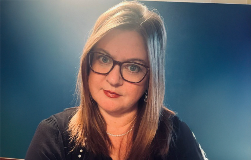
When Dr. Sevtap Savas first moved to Canada from Türkiye in 2002, she wouldn’t have been able to guess that she’d become a cancer researcher—let alone that she’d end up living in Newfoundland and Labrador.
But both of those things are now her reality. A professor of human genetics and oncology at Memorial University of Newfoundland, Dr. Savas’ research considers the full context of a cancer patient’s reality. As a molecular geneticist, she studies the genetic indicators that shape cancer outcomes, while also researching the social outcomes of the disease, specifically the marginalization and stigma that patients may face in their social lives and work settings.
These distinct but complimentary aspects of cancer research have helped make her an invaluable contributor to the MOHCCN’s Atlantic Cancer Consortium (ACC), where she’s part of a research project focused on colorectal cancer while also leading the ACC’s Patient Advisory Committee, a group of Atlantic Canadians affected by cancer that help guide the consortium’s research and public engagement priorities.
We spoke with Dr. Savas about what fuels her dedication to cancer research, why working closely with patients matters, and the powerful potential of collaborative efforts like the Marathon of Hope Cancer Centres Network.
Why did you become a cancer researcher? Was there a particular moment or experience that led to this decision?
I am a molecular geneticist by training and was working on hereditary diseases prior to cancer research. I accidentally became a cancer scientist when I moved to Canada in 2002 and it's been my main priority ever since. There’s so much we still don’t know about this disease that impacts such a large portion of the global population.
Later, several of my close family members were diagnosed with cancer and seeing what my loved ones experienced motivates me to do even more. Cancer is terrible. We all need to work together to overcome it. I believe that there is a time in the future where we will declare the world cancer-free.
Cancer research is difficult: progress is slow and for every step forward there may be quite a few steps backwards or sideways. What inspires you to keep going? What life lessons have you learned through cancer research?
That is a great question that we need to speak openly about more often. While none of us is happy that we have not fully figured out, controlled, and cured cancer yet, we are also very proud of each small but significant advance made towards understanding and eradicating this disease. As humans, we have achieved many innovations, most of the time not by chance but by resilience and continuous learning.
Initiatives that increase collaboration and investment, like the Marathon of Hope Cancer Centres Network, are key to addressing cancer. As a data analyst, I understand the significant role of Marathon of Hope Cancer Centres Network in creating high-quality data and making it available for further research so that we don’t need to duplicate efforts.
How would you explain your current research focus to a cancer patient or their family member?
My work focuses on what happens to people after their cancer diagnosis. For example, I’m interested in whether their cancer comes back, and if so, whether it comes back early or later during their survivorship phase. I then test whether a person’s genetic features might help predict these events and their timing. We use high-level computational and statistical applications to explore quite understudied areas. These explorations are fun, as usually no one else has been there before us. However, finding something concrete right away is also very challenging.
My other research field is the social outcomes of people diagnosed with cancer. My particular interest is whether people with a history of cancer feel or experience being marginalized by others in social settings and workplace environments. Many people assume that we all support patients, but when we talk to people with a history of cancer, they sometimes express that they feel marginalized, miss out on opportunities, and are treated differently. I want to know whether features of these individuals or their diseases can be linked to their experiences. By identifying these features, we can help predict risk of potential marginalization in future patients. Our hope is that by identifying those at risk, we can support them better and more appropriately.
Last, I should also mention my work supporting patient engagement in cancer research and public outreach. I’ve been working in this field since 2019, and I lead two groups, the Atlantic Cancer Consortium’s Patient Advisory Committee and the Public Interest Group on Cancer Research. Together, we identify patient priorities, organize public events, design and conduct projects, and advocate for people and families affected by cancer. It is a wonderful area that I find not only important but also challenging. As a relatively new interest of mine, I never stop learning. I am very grateful for our patient and public partners for making this a possibility and for their vital role in everything we do.
What impact do you hope your research will have on cancer treatment and the outcomes for patients?
I would like the hard work of my students and assistants to lead the way. Our primary interest is prognosis, and as such, patient outcomes. Eventually, we would like to improve outcomes for each patient through our and other groups’ contributions to cancer research, advocacy, patient engagement, and public outreach.
Just like Terry Fox united Canadians nearly 45 years ago, the Marathon of Hope Cancer Centres Network is uniting researchers, clinicians, patients and administrators from cancer treatment and research institutions across Canada to accelerate precision medicine. How important is this collaboration and what impact do you think it could have on cancer research and treatment?
Extremely important! For the past six years, we have been working on establishing and operating the Atlantic Cancer Consortium. We believe in the importance of its mandates and are more than willing to give our extra time and effort to that work.
By bringing so many talented and dedicated people together, MOHCCN has created unique opportunities to advance cancer research in Canada. We’re going to see its impact more and more as time goes on. I cannot wait to witness it.
If a researcher, clinician, patient or donor asked you why the Marathon of Hope Cancer Centres Network is important, what would you tell them?
I would say that by uniting so many people for a common goal and creating opportunities for collaboration, research, training, and public outreach, MOHCCN is helping to make Terry’s dream a reality.
What does Terry Fox mean to you? How does Terry inspire you?
I don’t know how many times the story of Terry Fox and his family’s dedication to his cause has brought me to tears. They’re wonderful people who define what it means to be champions for the people.
"MOHCCN has created unique opportunities to advance cancer research in Canada. We’re going to see its impact more and more as time goes on. I cannot wait to witness it."
Related Team Member
-
Sevtap
Researcher
Savas
-
Regional Consortia
Atlantic Cancer Consortium
- Prince Edward Island
- New Brunswick
- Newfoundland and Labrador
- Nova Scotia
We have rallied our region’s leading cancer researchers, institutions and care facilities to unite around this vision to enhance inter-institutional and inter-provincial cancer research collaboration,...Read more
Related News
-
Q&A with Dr. Versha Banerji: Turning perseverance into progress for patients
Dr. Versha Banerji is a hematologist, clinician-scientist, and translational researcher based in Winnipeg. Through the MOHCCN, she leads a patient-centred research program focused on improving access ... -
Q&A with Dr. Lisa Porter: Bringing hope and discovery to communities across Canada
Dr. Lisa Porter is the Windsor lead for the Marathon of Hope Cancer Centres Network, working to ensure that the genetics and experiences of Windsor-Essex families are represented in Canada’s national ... -
A Q&A with Neetu Singh, project manager for the Atlantic Cancer Consortium
Neetu Singh is the Project Manager for the Atlantic Cancer Consortium, leading collaborative efforts to advance precision medicine in cancer research across Atlantic Canada. -
Researcher Profile: A Q&A with Dr. Pinaki Bose
In this Q&A, Dr. Bose reflects on the winding path that led him to cancer research, the value of collaboration, and the inspiration he draws from Terry Fox’s legacy and the hope of a future where ...