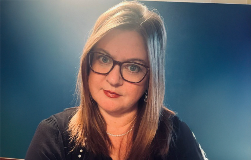
A Q&A with Neetu Singh, project manager for the Atlantic Cancer Consortium

In cancer research, success depends on more than just great science—it takes coordination, strategy and the ability to keep every moving part working in harmony. That’s where project managers step in, acting as the conductors who ensure the entire research orchestra stays in tune. 

At the Atlantic Cancer Consortium, this role is played by Neetu Singh (Memorial University of Newfoundland), who coordinates experts from across all four Atlantic provinces to work together to advance precision medicine for patients in Atlantic Canada and beyond. With a lifelong passion for understanding cancer and a deep commitment to collaboration, she is helping build the connections, infrastructure and momentum that make groundbreaking research possible. 

We spoke to Neetu to learn about the personal experiences that shaped her path, the lessons she’s learned from working in this challenging field, and how the MOHCCN is transforming cancer research in Atlantic Canada. 

We hope you enjoy this conversation as much as we did! 

Why did you get involved in cancer research? Was there a particular moment or experience that led to this decision? 

I grew up in India, a student of science and biology, but also someone deeply sensitive to human suffering. From a young age, I was struck by the sight of long lines in hospital corridors - patients waiting with hope, holding on to faith and resilience as they sought treatments for life-threatening diseases like cancer. By my graduation and master’s studies, I understood, at least in theory, how cancer develops. But the question that lingered in my mind was - in a world so advanced in science and technology, why is it that some patients find a cure and return to normal life, while others are left without hope? This contrast was something I just could not ignore. 

That question, I believe, and the need to explore it further to find an answer, drove me to truly understand cancer. It was this passion that led me to join a cancer research laboratory in India, where I pursued and completed my PhD. At that time, I believed - with everything in me - that my efforts could make a difference in the future and here I am. 

Cancer research is difficult: progress is slow and for every step forward there may be quite a few steps backwards or sideways. What inspires you to keep going? What life lessons have you learned through your relationship with cancer research? 

Yes, cancer is such a complex and ever-evolving disease - that’s what makes it so challenging to find a single solution. While medical science has made incredible advances over the past few decades, the disease itself has also adapted, especially because it's so closely linked with our lifestyle choices. 

Through my work in cancer research, I’ve learned that progress is not always linear. It takes time, resilience, and a strong spirit to bounce back after you hit a failure. But what inspires me to keep going is the belief that every small step we take contributes to something much bigger - something that could one day make a real difference for patients and their families. 

I truly believe that beating cancer isn’t just about medicine alone. It takes a full, holistic approach-effective treatment, major lifestyle shifts, and above all, that inner determination to keep pushing through the fight. The positive outlook toward life and work is what keeps me going. 

What is your role as a Project Manager for the Marathon of Hope Cancer Centres Network? 

Well, on paper, my role is to facilitate and coordinate activities across the Consortium. In practice, it’s much more strategic. A big part of my responsibility is ensuring smooth operations and keeping the consortium aligned with its overarching vision and goals. 

 This includes monitoring budgets to make sure funds are being used efficiently and transparently, tracking deliverables and milestones to measure our progress, and ensuring that we meet all deadlines, whether they’re set by funders, regulators, or internal teams. I also work closely with researchers, funders, and institutional reps to address questions, clarify expectations, and support collaboration. Overall, my role is about connecting all these moving parts, identifying gaps early, and ensuring that ACC continues to operate as a cohesive team, making continuous progress to contribute to Network’s goal. 

 Just like Terry Fox united Canadians nearly 45 years ago, the Marathon of Hope Cancer Centres Network is uniting researchers, clinicians, patients and administrators from cancer treatment and research institutions across Canada to accelerate precision medicine. How important is this collaboration and what impact has it had in your region? 

Building a network of this scale is truly transformative, in my opinion. Creating something meaningful and impactful requires collaboration - and that’s exactly what this network represents.  

In our region, this has had a profound impact. It has brought together researchers, clinicians, and Institutions who may never have had a reason - or the resources - to collaborate before. Together, we’ve created numerous jobs, built strong cross-provincial research teams, developed provincial biobanks, and trained the next gen cancer researchers. This is a foundation for long-term, sustainable progress. 

From a patient perspective, I know the outcomes we all hope for - the kind that reaches patients directly, will take time. That’s what we’re hoping for in the next implementation phase of this project. Our Patient Advisory Committee has built a huge community in the Atlantic that engages cancer patients and family members who are now part of this journey with us. 

If a researcher, clinician, patient or donor asked you why the Marathon of Hope Cancer Centres Network is important, what would you tell them? 

We’ve all heard the saying, “the more, the merrier.” I believe the Marathon of Hope Cancer Centres Network has already won half the battle against cancer by uniting an incredible network of experts from across the country. 

I can at least speak for Atlantic - it was no easy task to bring together a team spanning all four provinces. It required commitment, collaboration, and a shared vision – ensuring that each of us worked with a full heart to piece together a future where cancer treatment is not one-size-fits-all but truly personalized, effective and accessible to all. 

This unity, this collective strength, is what gives us hope. It’s proof that when we come together with a common purpose, we can build something powerful enough to change lives and shape the future of cancer care. 

What does Terry Fox mean to you? How does Terry inspire you? 

Terry Fox is not just a name – he’s a living legacy that continues to inspire this entire country. I still wonder sometimes, how a young man in his 20s, with such a profound physical challenge, could take on something as extraordinary as running a marathon a day, over 143 days, for such a big cause. It feels almost impossible to me, yet magical at the same time.  

What amazes me most is the clarity and determination he had at such a young age to start something so monumental. I think the vision he held and the courage he took is the most inspiring things in my life. I feel incredibly fortunate to be part of this continuum and living in the very city from where Terry actually started his marathon - St. John's. 

About the author 

Neetu Singh is the Project Manager for the Atlantic Cancer Consortium, leading collaborative efforts to advance precision medicine in cancer research across Atlantic Canada. With a background in science and over seven years in research management, she is passionate about building strong networks, supporting researchers and trainees, and driving initiatives that bring us closer to personalized cancer care. 

"We’ve all heard the saying, 'the more, the merrier.' I believe the Marathon of Hope Cancer Centres Network has already won half the battle against cancer by uniting an incredible network of experts from across the country."