
Why I’m so excited about the potential impact of the Marathon of Hope Cancer Centres Network
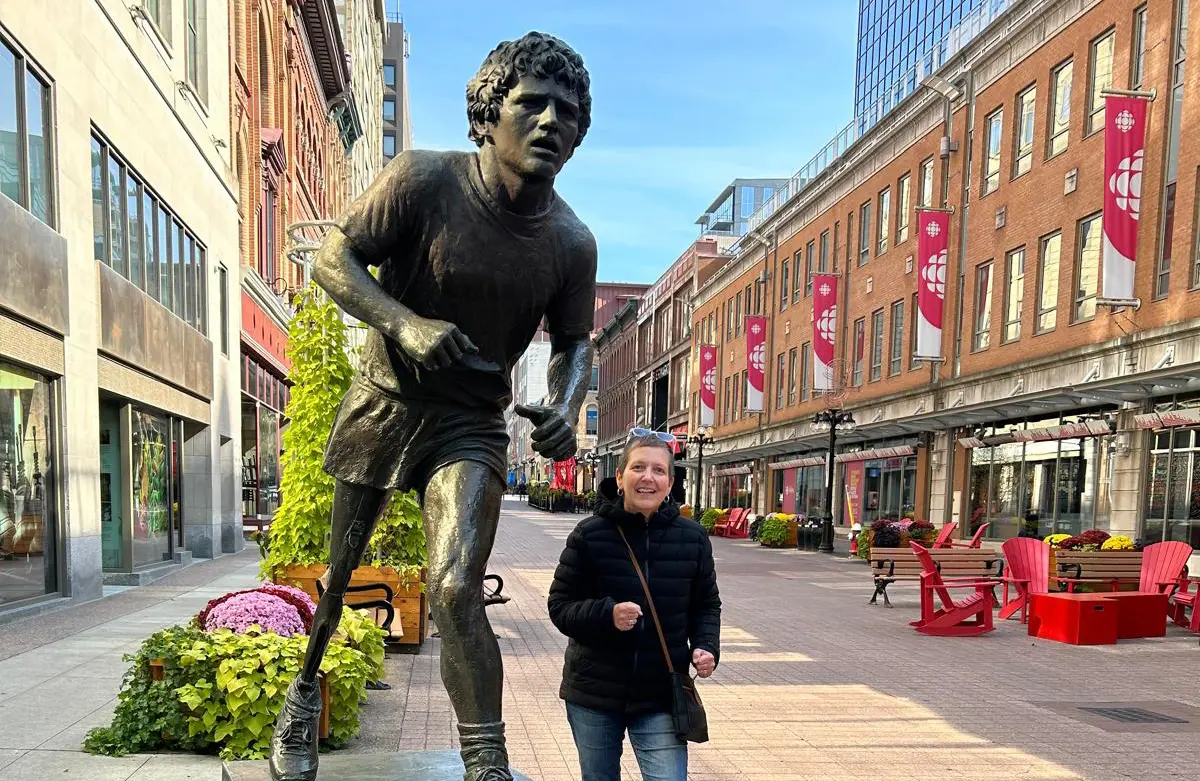
By Dr. Catalina López-Correa*
It’s been exactly one year since I joined the Marathon of Hope Cancer Centres Network. I came to the Network wearing many hats: a physician, a genomics scientist, a leader in national and international genomics, and, more recently, a breast cancer patient. Each of these perspectives shapes the way I see the Network today — and the reason I am so inspired by what we are building together.
As a patient, and as co-chair of the Patient Working Group, I am proud of the way the Network is ensuring that patient voices are not only heard but meaningfully integrated into research. This is not symbolic — it is shaping the design of projects and changing the way precision oncology evolves in Canada.
In my own cancer journey, I had the privilege to access several genomic tests: from a hereditary cancer panel, to a molecular profile of my tumour, and finally to a whole genome sequence of my tumour. This made me a proud participant in the Personalized Oncogenomics Project (POG) in BC — a project that is part of the MOHCCN and is contributing data to our Gold Cohort. These experiences gave me confidence that my care has been informed by the latest science, tailored to my own genome, and not just based on current standard of care protocols. Every patient in Canada deserves that same opportunity, and I am excited that POG data can help make that a reality.
As a woman of Latin American origin, I am especially committed to equity, diversity, and inclusion. The Network’s potential to increase representation in our datasets — ensuring that patients from diverse backgrounds and communities find answers in the data — is something we cannot underestimate. Without diversity and equitable access, the promise of precision oncology will remain incomplete.
As a physician, I see the immense clinical impact ahead. Genomics is not about generating interesting data — it is about transforming patient care. The discoveries coming out of MOHCCN are already pointing us toward better diagnoses and treatments, and will, I believe, transform clinical care, setting an example for other countries to follow.
As a genomics scientist, I am inspired by the scale and ambition of this initiative. At its heart, MOHCCN is advancing whole genome sequencing as a standard tool in cancer care — a technology that allows us to see the complete molecular landscape of each patient’s cancer. And it is not just about sequencing genomes. It is about using artificial intelligence and advanced analytics to make sense of this complex data, so that the results are actionable: guiding diagnosis, identifying better treatments, and ultimately improving quality of life for patients. A truly pan-Canadian effort — integrating data from across provinces through a federated model — is no small task. But it positions MOHCCN and Canada as a global leader in data coordination, the responsible use of AI, and collaborative science.
And as a leader in genomics, in my role as Chief Global Strategy Officer at Genome Canada, and previously as Chief Scientific Officer at Genome Canada, Genome BC, and Genome Quebec, I see MOHCCN as a model of what we can accomplish when we align efforts across provinces, institutions, and disciplines. This Network demonstrates the power of large-scale coordination, meaningful patient engagement, and a commitment to equity, diversity, and inclusion.
Of course, none of this would be possible without the extraordinary legacy of Terry Fox. His courage and determination continue to inspire us, and this Network carries forward his vision of turning a personal cancer journey into a national and global movement for change. Every researcher, oncologist and administrator; every patient who contributes their data, shares their story, and provides their experience to the Network; every Terry Foxer who shows up on Run Day or donates to a school run—all of us play a role in advancing Terry’s legacy and values through this Network.
For me, as a Latina, breast cancer patient and a scientist, being part of this Network has both professional and deeply personal impacts. I know what inequities in cancer care look like. I also know the hope that comes when science, care, and compassion come together.
That is why I am so excited for what this Network can achieve. We are sharing data, science and knowledge like never before. But most importantly, we are working together to shape a Network that puts patients at the centre, drives equity and inclusion, and brings us closer to realizing the full promise of genomics and precision oncology in Canada, advancing outcomes and quality of life for all cancer patients—no matter who they are or where they live.
Terry Fox showed us the way. Together, we are getting one step closer to finishing the marathon against cancer that he started 45 years ago.
* Dr. Lopez-Correa is the Chief Global Strategy Officer (CGSO) at Genome Canada. As CGSO, she is taking genomics to the next level in Canada, by advancing mission driven initiatives using genomics to solve the most pressing global challenges. Dr. Lopez-Correa holds an MD from the Universidad Pontificia Bolivariana in Colombia, an MSc in Human Genetics from Paris V University in France, a PhD in Medical Sciences from the KULeuven in Belgium, and a mini-MBA from McGill University in Canada.
Prior to that, she was Executive Director of the Canadian COVID19 Genomics Network (CanCOGeN) and CSO at Genome Canada, COO at Ruta N Medellin, CSO at Genome BC, and at Genome Quebec. Dr. Lopez-Correa has also held leadership positions at deCODE Genetics, and Eli Lilly and has played advisory roles at the European Commission, Innovative Medicine Initiatives and other private and public sector entities working in the application and implementation of genomics technologies. As part of her commitment to international development, Dr. Lopez-Correa has led several initiatives aimed at demonstrating the impact of genomics and innovation in developing countries. As a breast cancer patient herself, Dr. Lopez-Correa has been a strong advocate for the use of genomics to improve diagnosis and treatment of cancer patients. She is the co-chair of the Patient Working Group of the Marathon of Hope Cancer Centres Network.
The discoveries coming out of MOHCCN are already pointing us toward better diagnoses and treatments, and will, I believe, transform clinical care, setting an example for other countries to follow.
Related Team Member
-
Catalina
Working Group Chair
Lopez-Correa